Why Every Restaurant Needs Professional Kitchen Uniforms
Build a restaurant uniform brief around the service, the people and the laundry. Work through an open-kitchen example and a new-starter handover.

Look at the kitchen from both sides of the pass
Stand at the dining-room entrance just before service. In an open kitchen, the guest can see who is plating, who is running dishes and who is speaking to the floor manager. Now walk round the pass. Inside the kitchen, the same clothing has to work when someone reaches into a low fridge or changes an apron midway through dinner. A restaurant uniform has two audiences, and a good specification makes room for both.
Take a photograph of the empty pass and sketch the usual positions during service. Think about which roles guests see and where your team changes tasks. That picture gives you a more practical starting point for restaurant uniforms than choosing a single favourite jacket and issuing it to everyone.
Use a shared look to make roles legible
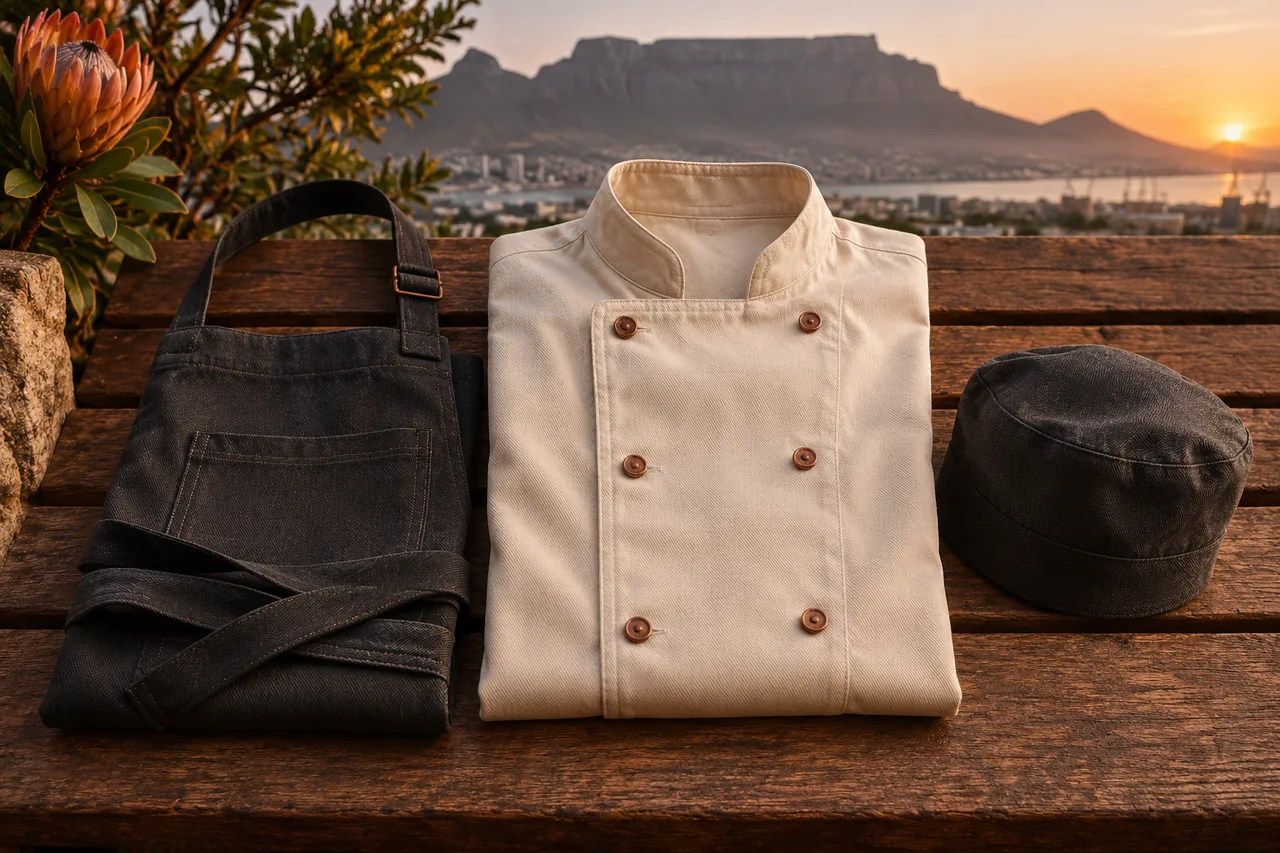
Consistency can be as simple as a common apron colour worn with individually fitted jackets. Decide what a colleague should be able to recognise at a glance. Perhaps the person leading the pass needs to be easy for visiting floor staff to identify. Perhaps everybody moves between prep and plating, making a common look more useful than visibly distinct roles. Choose a system that reflects how your kitchen actually works.
Write down what the visual cue means and tell new starters how to use it. A visiting runner should still be able to find the right person if that person changes a soiled apron. Introductions, station assignments and clear shift handovers do much of that work. Clothing can reinforce the arrangement without carrying the whole responsibility for communication.
Build a core outfit and vary the pieces that matter
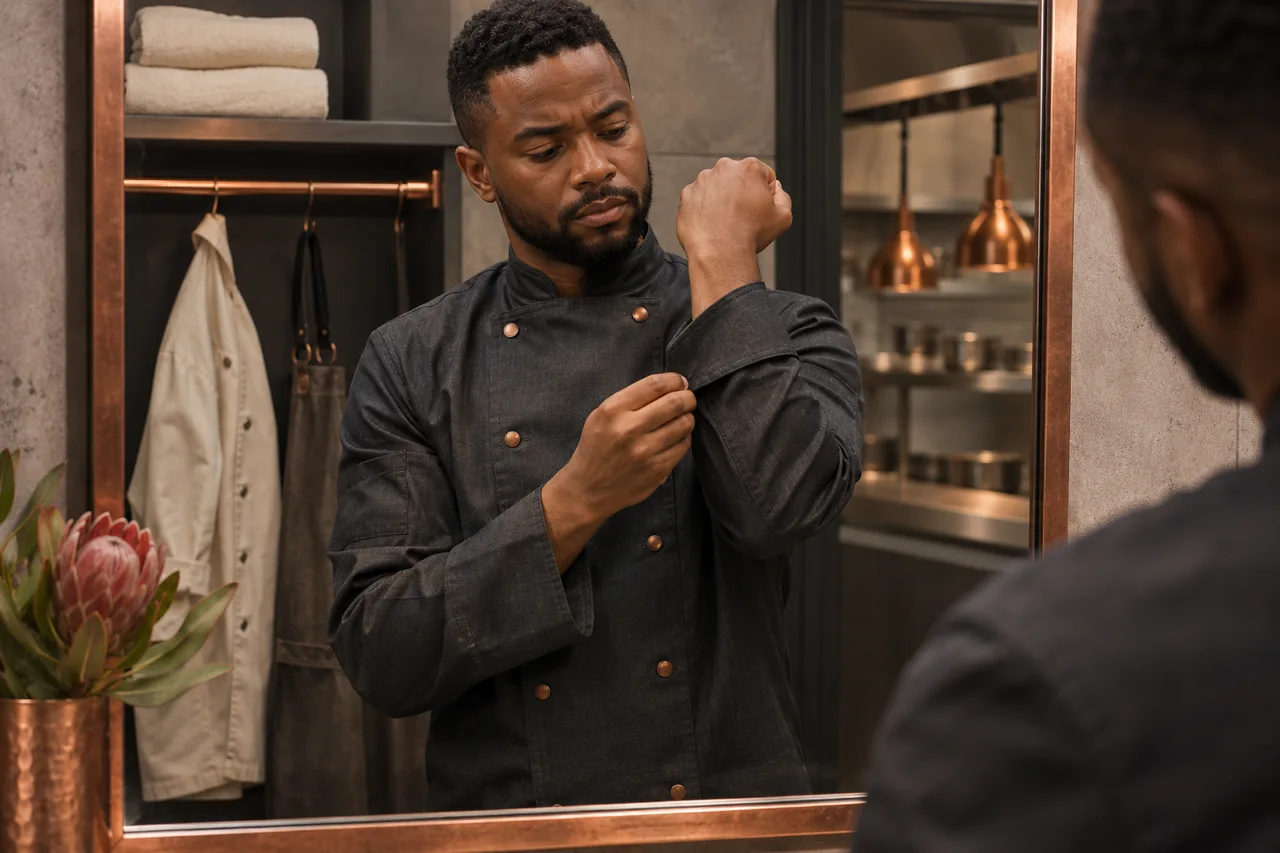
For an example, imagine a restaurant with a prep cook who moves to the pass at lunch, a chef who leads dinner and a pastry cook who works an earlier shift. All share one uniform colour brief. Each tries chef trousers and a permitted jacket cut. They try their aprons at different working heights and record which lengths allow comfortable movement at their own benches.
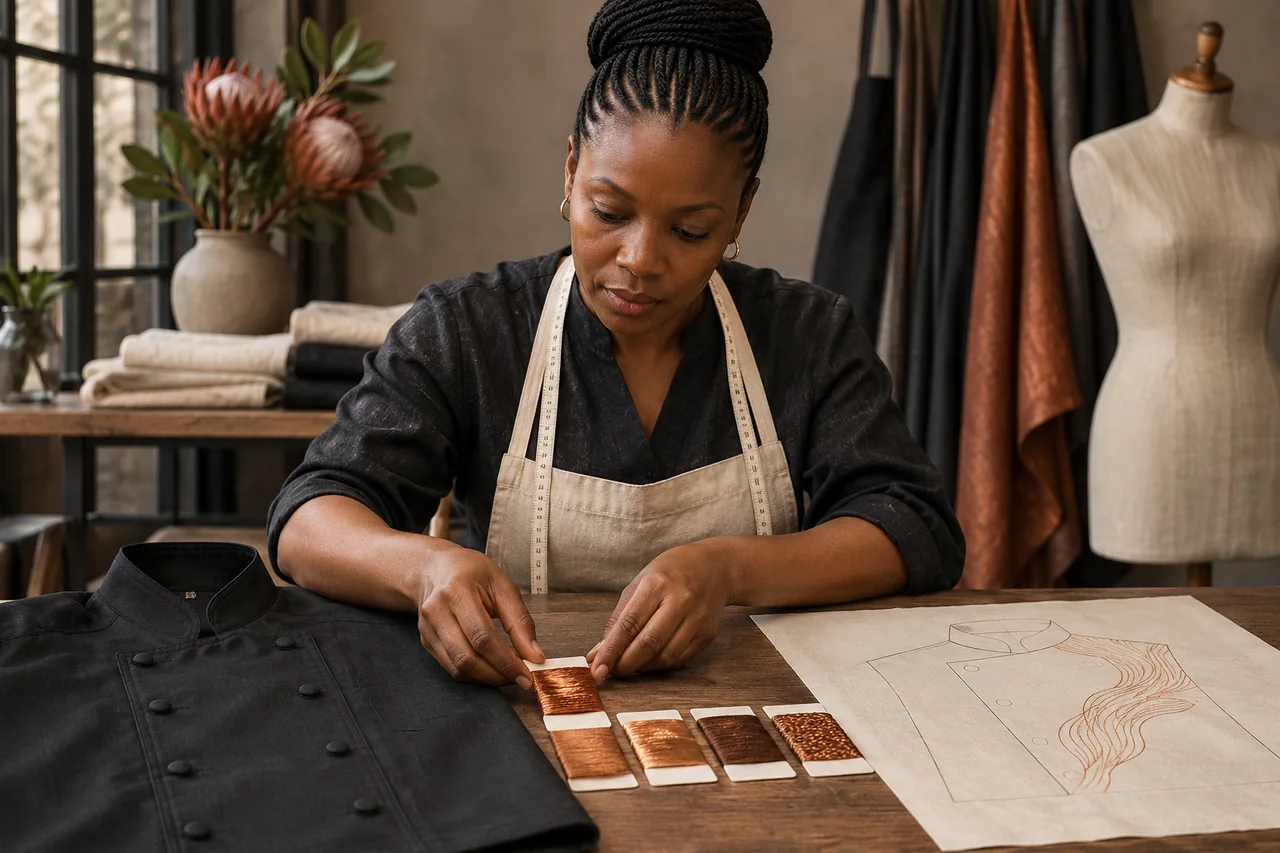
The manager keeps the common visual elements in a short brief. The fitting record captures individual sizes and any role-specific variation. This makes it easier to respond when someone changes stations. You can revisit the apron or jacket requirement for the new work while retaining the restaurant's established appearance.
Give the laundry a voice
Follow one apron through the week
Track a clean apron from its shelf to its wearer, through service, into the used-linen process and back to the clean shelf. Where is the delay? Does a late Friday change return before the next shift? Are sizes returned as issued sets or collected together? The answers shape the number of chef aprons and spare garments the restaurant needs.
Bring the actual garment care instructions to the person running the laundry. Ask how items will be identified, how damaged pieces will be flagged and who releases replacements. A beautifully presented launch set can be difficult to maintain if clean changes are stored somewhere staff cannot reach during service. Put the routine in the same handover notes as the dress requirements.
Make presentation specific enough to teach
“Look professional” leaves a new starter to guess what the restaurant means. A short written brief can say which jacket and apron belong to each station, where clean headwear is kept and who to approach about fit. An approved photograph of the uniform worn correctly can be helpful when staff speak different first languages or work different shift patterns.
Review the brief with someone who has never used it. Ask them to put together a set for the evening pass using only the instructions. If they cannot find the right apron or identify the correct jacket, improve the labelling or wording. Check that the documented requirements agree with the kitchen's own hygiene and safety procedures. Request qualified workplace guidance for protective clothing decisions.
Invite feedback that can change the next order
After a trial, ask each wearer the same three questions. Which movement felt restricted? Which piece needed adjustment during service? What was difficult to manage after the shift? Record the station and garment reference with the answer. A comment about an apron that catches when the wearer crouches is more actionable than a general request for a different uniform.
Separate issues that can be resolved through fitting from those that need a different garment or an operational change. If clean changes run out after the late sitting, buying a different cut of jacket will do little to help. If only one wearer experiences the problem, offer a private fitting and check an alternative size or cut.
Order for the next starter as well as today's team
Keep an approved list of garment references, colours, charts and any branding proofs. Assign someone to check the list when a starter joins or a piece needs replacement. Record current availability at the time of reorder because an older quote cannot tell you what is available today. Review the brief whenever a station or laundry arrangement changes.
To put your own plan into motion, compare kitchen uniform components and prepare a restaurant team quotation request. Include the roles, quantities, colours under consideration and questions from the fitting. Those details make it easier to compare proposals on how well they support service throughout the week.