A Complete Guide to Ordering Chef Uniforms for Your Restaurant or Hotel
Plan a team uniform order from role counts and fitting sessions to artwork approval, delivery checks and a repeatable process for new starters.
Count wearers by station and shift
The headcount in a hotel payroll report is a poor starting quantity for a uniform purchase order. The breakfast chef, a casual banquet cook and the person who covers both may appear under different cost centres. Some wear issued sets. Others collect garments from a shared laundry. Before counting jackets, decide who the order covers, where each person works and how garments move between shifts.
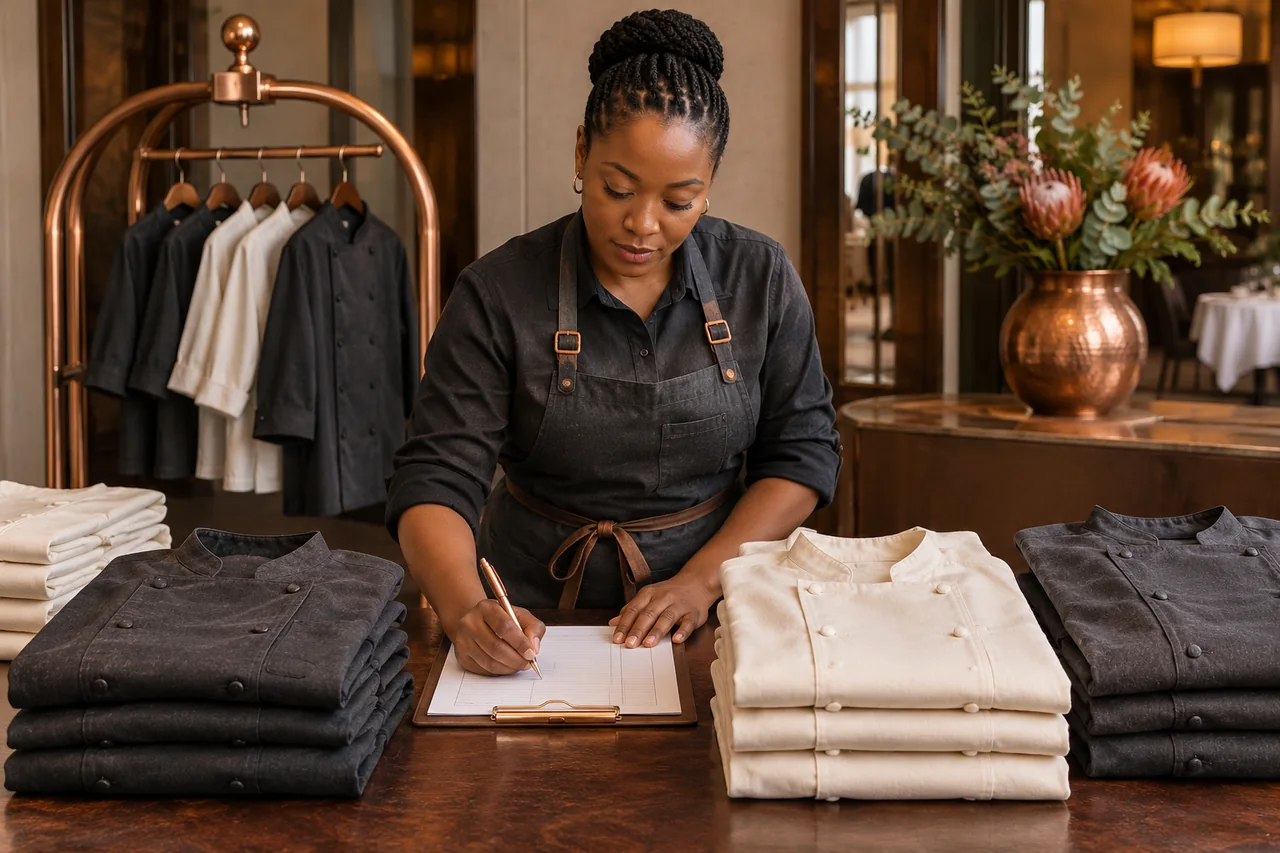
Start with a roster for an ordinary week and add any event that changes staffing. List roles, numbers of wearers, required components and the person who can approve each site's choices. Where one person works across departments, establish whether the same uniform can be worn in both. For a hotel with several kitchens, ask each kitchen lead to sign off its own counts.
Work out quantities from the laundry cycle
Map when staff collect clean clothing, when they change and when used pieces come back. Consider an example with four breakfast cooks. If each needs a fresh apron for each of two services before the next wash returns, that interval calls for eight apron issues. A reserve for spills, absence or delayed laundry is a separate decision. Record the reason for the reserve and check it against your kitchen's actual experience.
Use separate rows for chef jackets, chef aprons and other pieces. An apron change during service need not mean a change of every other item. Review the figures with whoever operates the clean store. That person often knows which sizes disappear first, which pieces sit unused and when a delivery from the laundry typically arrives.
Organise fittings before personalisation
Give each wearer access to the chart for the selected garment. Ask whether it lists body measurements or finished garment measurements. Take only the measurements needed for the choice and give staff a private way to submit or discuss them. For the kitchen lead, a summary of styles, sizes and quantities usually supplies the information needed to approve the order.
Arrange a sample fitting if available and use the same short movement routine for each person. Wear the usual base layer and apron, reach forward, bend to a low shelf and check the cuffs and hem. Record the approved size alongside the exact garment reference. If a wearer needs a different cut, confirm its availability and colour before adding it to the final totals. Use the size guide to prepare questions for the fitting.
Separate artwork approval from the headcount
A common team logo and individual names involve different records. Keep one approved logo brief per placement and garment. Keep a separate restricted list for names, sizes and quantities. Read each name back to its wearer, including accents and punctuation, before it goes on the approval sheet. Clarify what happens if a wearer changes role or leaves after approval.
For the logo, supply an authorised artwork file and describe the placement from the wearer's point of view. Check a proof against the actual jacket or apron colour. Ask for the branding method, dimensions, charges and care instructions to be confirmed. The custom branding page gives the team a place to start that discussion while final garment choices are being made.
Make the quotation easy to check
Keep one line per combination
Combine entries only when the garment reference, size, colour and decoration are identical. Add a total for each style and a total for the order. Cross-check both against the roster and the planned rotation. If an employee name must be applied to a particular garment, keep a reference to the approved personalisation list. Put a revision date on both records so a supplier can identify the latest instructions.
Define the destination, requested date and person responsible for receiving the goods. Explain whether several departments need separate packing or identification. Ask the supplier to confirm what it can provide and to itemise availability, delivery arrangements, decoration charges and any sample costs. A date in your event calendar is a requirement to discuss. It becomes a commitment only when confirmed for the specific order.
Inspect the delivery before distributing it
Check the cartons against the packing record and compare their contents with your approved order lines. Examine a selection of each style, size and colour. For named garments, check every name and its assigned size. Review logo spelling, location and appearance against the approved proof. Record discrepancies with the relevant reference and photographs, then ask the supplier how to proceed under the agreed terms.
Give the issued pieces and their care instructions to the right person. For a pooled laundry arrangement, confirm that the clean store can identify the garment and size before the first wash. Retain the order reference and approval records somewhere the next buyer will be authorised to access.
Leave a path for the next order
After the first rotation, check remaining clean stock by size and compare it with your assumptions. Record any shortfall and its cause. A temporary event may call for a different reserve from an ongoing increase in covers. Ask new starters for fitting feedback and use it when reviewing the next order.
For a restaurant group, compare the restaurant uniform guide with the needs of each branch. For a hotel, record any separate breakfast, pastry and banqueting requirements in the hotel uniform brief. Start a bulk chef uniform enquiry once you can share the role counts, estimated quantities and decisions that still need confirmation.